
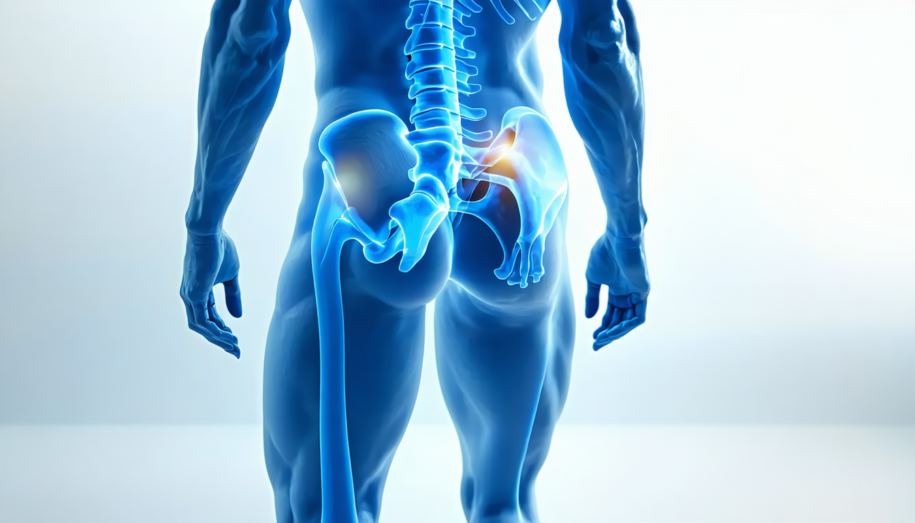
That sharp, burning pain shooting from your lower back into your leg: it has a name, and it’s one of the most common reasons people walk through our door at Reliable Spine.
If you’ve ever felt a jolt of pain travel from your buttock down the back of your thigh, or experienced tingling in your calf or foot that just won’t go away, you’ve likely experienced sciatica.
But here’s something most people don’t realise: sciatica is not a diagnosis. It’s a symptom.
What does “sciatica” actually mean?
Sciatica describes pain that travels along the path of the sciatic nerve. This nerve is the longest and thickest in your body, roughly the width of your little finger. It runs from the lower back, through the buttock, down the back of the leg, and branches into the foot.
When something irritates or compresses one of the nerve roots that form the sciatic nerve (typically at the L4, L5, or S1 level in the lower spine), pain can radiate along part or all of this pathway.
Calling your condition “sciatica” is a bit like saying you have a “headache.” It tells you where the pain is, but not why it’s happening.
What does sciatica feel like?
People describe sciatic pain in many different ways:
- A burning sensation that runs down the leg
- A sharp, electric shock-like jolt
- A deep, dull ache in the buttock
- Tingling or pins and needles in the calf or foot
- Numbness in parts of the leg
- A feeling of weakness, as though the leg might “give way”
- Pain that worsens with sitting, coughing, or sneezing
Sciatica typically affects one side. If you’re experiencing symptoms in both legs simultaneously, or if you notice changes in bladder or bowel function, seek medical attention immediately as this may indicate a more serious condition called cauda equina syndrome.
Why does the pain travel so far from the spine?
This is the question that confuses most people. “My back feels fine, so why does my leg hurt?”
The answer lies in how your nervous system is wired. The nerves that exit your lower spine travel a long distance before reaching their final destination in your leg and foot. When a nerve is irritated at its root (near the spine), the brain often interprets the pain as coming from somewhere along the nerve’s entire pathway.
Think of it like a garden hose: if you stand on the hose near the tap, the blockage affects water flow all the way to the end.
This is called referred pain, and it’s the reason you can have a problem in your lower back that you feel primarily in your calf, foot, or buttock.
What causes sciatica?
Several conditions can compress or irritate the sciatic nerve roots:
Disc bulge or herniation The most common cause in people under 50. When disc material pushes outward, it can press directly on a nerve root or trigger an inflammatory response that irritates the nerve.
Spinal stenosis A narrowing of the spinal canal or the bony openings (foramina) where nerves exit. More common in people over 60 and often develops gradually due to age-related changes.
Degenerative disc disease As discs lose height over time, the space available for nerves decreases. Bone spurs (osteophytes) may also form and encroach on nerve pathways.
Spondylolisthesis A condition where one vertebra shifts forward on the one below it, potentially narrowing the space available for the nerve.
Piriformis syndrome In some people, the sciatic nerve passes through or beneath the piriformis muscle in the buttock. If this muscle becomes tight or spasms, it can compress the nerve. This is less common than spinal causes but worth considering when imaging of the spine appears normal.
How is sciatica assessed?
At Reliable Spine, we don’t just ask “where does it hurt?” We want to know why.
Our assessment includes:
- Detailed history: When did it start? What makes it worse or better? Have you had this before? Any changes in bladder or bowel function?
- Neurological examination: Testing your reflexes, sensation, and muscle strength to identify which nerve level is likely involved.
- Orthopaedic testing: Specific provocative tests (such as the straight leg raise) designed to reproduce your symptoms in a controlled way.
- Movement analysis: How your spine moves, where it’s restricted, and what positions aggravate or relieve your pain.
This thorough approach allows us to identify the likely cause of your sciatica, not just confirm that it exists.
Treatment options at Reliable Spine
Once we understand the underlying cause, your treatment plan may include:
- Chiropractic adjustments: to restore mobility and reduce mechanical pressure on the affected nerve.
- Spinal decompression: gentle traction to create space around the compressed nerve root.
- Soft tissue therapy: to address muscle spasm and tension contributing to nerve irritation.
- Targeted exercises: specific stretches and strengthening exercises to support recovery and reduce the likelihood of recurrence.
- Activity modification advice: practical guidance on sitting, sleeping, lifting, and returning to exercise safely.
How long does sciatica take to resolve?
This depends on the underlying cause and severity. Mild cases may settle within a few weeks with appropriate care. More severe cases involving significant nerve compression may take several months.
The good news is that the majority of sciatica cases improve with conservative treatment. Research suggests that around 80-90% of people with sciatica recover without surgery.
Consistency with your treatment and rehabilitation programme makes a significant difference in outcomes.
Frequently Asked Questions
Is sciatica serious? Most cases of sciatica are painful but not dangerous. However, you should seek urgent medical attention if you experience sudden loss of bladder or bowel control, numbness in the saddle area (around the groin), or rapidly progressive weakness in both legs.
Should I get an MRI for sciatica? Not necessarily as a first step. Imaging is recommended when symptoms are severe, not improving with conservative care, or when clinical findings suggest a more serious underlying condition. Your chiropractor can advise whether imaging is appropriate for your case.
Can sciatica come back? Yes. Recurrence is possible, particularly if the underlying cause (such as a disc problem or spinal degeneration) remains. This is why rehabilitation and long-term spinal maintenance are important parts of your care plan.
Is it safe to exercise with sciatica? Generally yes, but the type of exercise matters. Walking is usually well-tolerated. High-impact activities or heavy lifting may aggravate symptoms during the acute phase. Your chiropractor will guide you on what’s appropriate at each stage of recovery.
What’s the best sleeping position for sciatica? Many people find relief sleeping on their side with a pillow between their knees, or on their back with a pillow under their knees to reduce pressure on the lower spine.
Tired of living with leg pain? Book your assessment at Reliable Spine today. We’ll identify what’s causing your sciatica and create a plan to help you get back to the activities you enjoy.