
A sharp pain down the leg when you stand from the sofa, a back that tightens after a short drive, or numbness that makes training feel uncertain can make everyday movement feel like a risk. Spinal decompression is a non-surgical treatment approach that may be considered for selected people with disc-related back pain, sciatica and persistent spinal symptoms. It is not a shortcut or a one-size-fits-all solution. Its value depends on understanding what is driving your symptoms first.
At Reliable Spine, care begins with a detailed assessment of your spinal function, movement, symptoms and relevant health history. This helps determine whether decompression may form a useful part of a wider treatment and rehabilitation plan, or whether another approach is more appropriate.
What is spinal decompression?
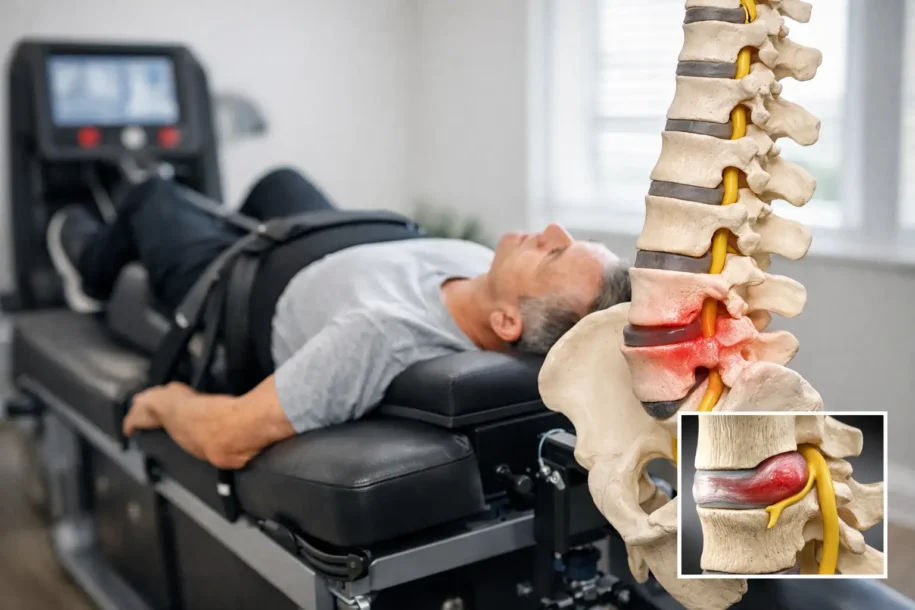
Spinal decompression uses a specialised treatment table to apply carefully controlled traction to an area of the spine, most often the lower back or neck. The aim is to create a gentle unloading effect through the spinal joints and discs, rather than simply pulling the body in a fixed position.
Intervertebral discs sit between the bones of the spine. They help absorb load and allow movement, but they can become painful when they are irritated, injured or placed under repeated strain. In some cases, disc changes can irritate nearby nerve tissue, contributing to symptoms such as sciatica, tingling, altered sensation or pain travelling into the buttock and leg.
During decompression, the treatment programme varies the level of pull and relaxation in a controlled way. For appropriate cases, this may help reduce mechanical stress around painful structures, support movement and make it easier to progress with hands-on care and rehabilitation. It should be viewed as one tool within a structured plan, not a stand-alone answer to every episode of back pain.
When spinal decompression may be considered
Spinal decompression is often discussed when symptoms suggest a disc or nerve-related component, particularly where pain has persisted despite rest, activity changes or basic self-management. Someone may have lower-back pain that is aggravated by sitting, bending or lifting, alongside pain extending into the leg. Others may have recurrent episodes that repeatedly limit work, walking, sleep or exercise.
It can also be considered for some neck conditions where pain refers into the shoulder or arm. However, pain in these areas does not automatically mean a disc is the cause. Shoulder, hip, knee and leg symptoms can arise from a range of movement, joint and soft-tissue issues. That is why a proper spinal and musculoskeletal assessment matters.
The most suitable candidates are not defined by a scan result alone. Symptoms, neurological findings, daily demands, movement patterns and response to examination all help guide clinical decisions. A disc bulge seen on imaging, for example, does not always explain a person’s pain. Equally, significant pain can exist even when the picture is not straightforward.
The assessment comes before the machine
A good treatment plan should answer more than where it hurts. It should explore how the problem began, what makes it worse or better, whether symptoms travel, and how the condition affects your ability to work, exercise, sleep and manage at home.
Your assessment may include spinal movement testing, postural analysis, neurological checks where appropriate, and an examination of how the hips, pelvis, shoulders and other areas are contributing. This connected approach is especially useful when the body has been compensating for some time. A painful lower back can change the way you walk, squat or lift, placing extra demand through the hips and knees. Neck pain can alter shoulder movement and contribute to recurring tension or headaches.
It is also essential to identify situations that require medical investigation or a different route of care. New or worsening weakness, significant loss of sensation, changes to bladder or bowel control, unexplained weight loss, fever, severe unrelenting pain or symptoms following major trauma should be assessed urgently by the appropriate medical service. Decompression is not suitable when red-flag symptoms are present.
What treatment usually involves
If spinal decompression is appropriate, your clinician will explain the recommended programme, expected goals and how it fits with the rest of your care. You remain comfortably positioned on the decompression table while the system applies a measured treatment cycle. Sessions are designed around your presentation and tolerance, with the settings adjusted as needed.
Some people describe the treatment as a gentle stretching or unloading sensation. It should not be painful. Mild post-treatment soreness can occur, particularly when an area has been sensitive or guarded for a long period, but this should be discussed and monitored. Your response between appointments is as important as what you feel during the session.
The number and frequency of sessions vary. A recent flare-up may need a different approach from long-standing pain with reduced movement confidence, deconditioning and compensatory patterns. Progress is judged by meaningful changes: less leg pain, easier walking, improved sitting tolerance, better sleep, greater range of movement or a return to activities that have been avoided.
Why rehabilitation is part of the process
Reducing pain is valuable, but it is rarely the whole job. If the underlying movement habits, reduced spinal control or loading problems remain unchanged, symptoms may return when normal life resumes.
Rehabilitation helps build capacity gradually. This may include exercises to improve spinal and hip movement, trunk control, posture awareness and confidence with bending, lifting or returning to sport. For an office-based worker, the plan may focus on breaking up prolonged sitting and restoring tolerance for commuting and desk work. For an active person, it may involve a staged return to running, gym training or recreational sport without repeatedly provoking symptoms.
The right exercise is not always the hardest exercise. Early on, the priority may be settling irritable symptoms and reintroducing simple movement. Later, the programme should become more specific to the demands that matter to you. Someone who lifts children, works on their feet or trains with weights needs a plan that prepares their body for those tasks.
What spinal decompression cannot promise
It is reasonable to want a clear answer when pain has taken over your routine. However, no responsible clinician can guarantee that a particular treatment will resolve every disc injury, episode of sciatica or chronic back problem. Recovery is influenced by the nature of the condition, duration of symptoms, general health, work demands, stress, sleep, activity levels and how the body responds to care.
Decompression does not replace medical care where surgery, medication, imaging or specialist review is needed. It also may not be recommended for certain spinal conditions, fractures, severe osteoporosis, particular inflammatory or neurological disorders, pregnancy-related considerations or other health factors. Your individual history should always be reviewed before treatment begins.
A transparent plan includes reassessment. If you are not responding as expected, the approach should be adjusted rather than continuing treatment without a clear reason. The goal is not to keep you dependent on appointments. It is to reduce pain where possible, improve function and give you practical ways to manage your spine with greater confidence.
Taking the next step with back or leg pain
If back pain, sciatica or suspected disc symptoms are stopping you from sitting comfortably, exercising, working or enjoying normal daily activities, do not rely on guesswork alone. A thorough consultation can establish whether spinal decompression is suitable and identify the wider factors that may be keeping the problem active.
The most useful next step is often not simply finding a treatment that feels good on the day. It is finding a clear explanation, an appropriate plan and the support to return steadily to the activities that matter to you.
Leave a Reply