
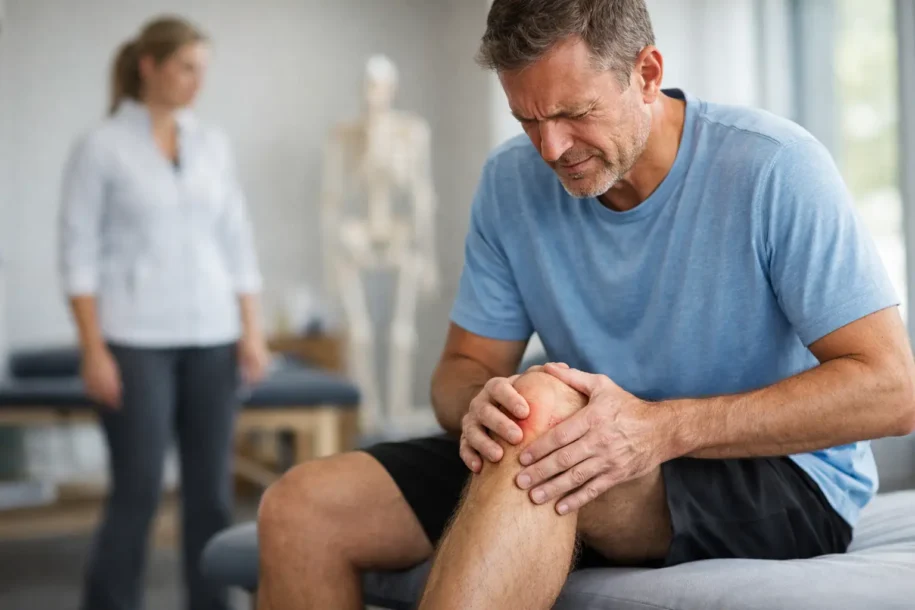
A painful knee is not always a knee problem. If you feel discomfort when climbing stairs, getting up from a chair, squatting, walking hills or returning to exercise, knee pain from poor movement may be part of the picture. The knee sits between the hip and the foot, so it is often affected by how well the rest of the body absorbs and controls load.
For many people, the pain begins gradually. Perhaps one knee starts to ache after a long day at work, a run feels uncomfortable, or a previously manageable gym session leaves the joint sore for days. Rest may settle the symptoms temporarily, but the discomfort returns as soon as normal activity resumes. This pattern can be frustrating, especially when you want to stay active without constantly monitoring every step.
Why poor movement can lead to knee pain
The knee is designed primarily to bend and straighten while remaining stable under load. It relies on the feet, ankles, hips, pelvis and trunk to guide that movement efficiently. When one area is stiff, weak, poorly controlled or compensating for another problem, the knee may be asked to deal with forces it is not well placed to manage.
For example, limited ankle movement can make it difficult to squat or walk downstairs smoothly. The foot may roll in excessively, the knee may drift inwards, or the body may shift weight away from the affected side. Reduced hip control can have a similar effect, particularly during walking, running, stepping down or single-leg exercises. The knee then becomes the point where the compensation is felt.
Spinal and pelvic function can also matter. Persistent low back pain, altered posture, sciatica or a previous disc injury can change how you stand, walk and transfer weight. You may not consciously notice a shortened stride, a rotated pelvis or a tendency to lean to one side. Over time, these compensations can place repeated stress through the hip and knee.
This does not mean every painful knee is caused by the spine, nor that every movement issue has one simple explanation. Arthritis, tendon irritation, ligament injuries, meniscal problems and direct trauma can all be relevant. The value of a thorough assessment is in identifying which factors are present for you rather than assuming the painful area tells the whole story.
Signs your knee pain may be linked to movement
Pain related to poor movement often changes with position and activity. You may notice it when rising from a low seat, descending stairs, kneeling, turning, jogging or after standing for a prolonged period. Some people describe clicking, stiffness, a feeling that the knee is not tracking smoothly, or soreness around the kneecap.
A recurring pattern is particularly useful information. If the pain settles when training stops but returns as soon as you resume squats, runs or long walks, the answer may not simply be to avoid activity indefinitely. It may indicate that your body needs a more suitable way to load, move and recover.
Look beyond the knee as well. A history of ankle sprains, hip tightness, one-sided low back pain, sciatica, foot pain or a visible difference in how you stand can all be relevant. These details help build a clearer picture of why the knee is under strain.
Common movement patterns that increase knee stress
There is no single “perfect” way to move, and healthy bodies vary. However, several patterns are commonly associated with avoidable knee loading when they occur repeatedly or under heavier demand.
The knee collapsing inwards
During a squat, step-down, landing or run, the knee may move inwards towards the other leg. A small amount of movement is normal, but a pronounced or poorly controlled inward drift can increase strain around the front and inside of the knee. It may be influenced by foot position, ankle mobility, hip strength, fatigue or technique.
Weight shifting to one side
People often offload a painful or stiff area without realising it. You might stand predominantly on one leg, push more strongly through one foot when climbing stairs or sit with your weight rotated. The opposite knee can become overloaded, while the original source of the shift remains unaddressed.
Limited hip or ankle mobility
When the hip cannot extend well during walking, or the ankle cannot bend adequately as you squat, another joint has to compensate. The knee may twist, travel forwards abruptly or take more force than intended. Mobility work can help in some cases, but only when it addresses the restriction that is actually affecting your movement.
A trunk and pelvis that lack control
Your trunk provides the stable base from which the legs move. If back pain, poor endurance or altered pelvic control changes that base, the leg can rotate or load differently with every step. This is one reason a knee assessment should not stop at the knee.
Why rest alone may not solve the problem
Reducing aggravating activity is often sensible in the short term, particularly when the knee is irritated or swollen. Yet rest cannot automatically restore joint control, strength, mobility or confidence in movement. Returning straight to the same volume of training, walking or work demands can recreate the same problem.
The goal is not to push through sharp pain or ignore swelling. It is to find an appropriate starting point and gradually rebuild capacity. For one person, that may mean modifying a deep squat and strengthening the hips. For another, it may involve addressing restricted ankle movement, improving walking tolerance or managing spinal symptoms that are affecting leg mechanics.
A rehabilitation plan should be specific enough to be useful but realistic enough to follow. Exercises need to fit your current ability, work routine and goals, whether that is getting through a shift comfortably, keeping up with family walks or returning to the gym.
Assessing knee pain from poor movement
A useful assessment considers how the knee behaves in the context of your whole body. At Reliable Spine, this can include discussing when symptoms started, previous injuries, training habits, work demands and any back, hip or foot symptoms. A clinician may then observe how you stand, walk, squat, step or balance, alongside examining relevant joint movement and spinal function.
This process helps distinguish between a knee that is locally irritated and a knee that is repeatedly being placed under stress by a wider movement issue. It also helps identify when further medical investigation or referral is appropriate.
Your care plan may include hands-on treatment where suitable, structural spine care, targeted rehabilitation and practical advice on modifying aggravating activities. If spinal dysfunction is contributing to altered movement, addressing this can form part of a broader plan to improve how the body shares load. The emphasis should remain on function: moving more comfortably, building confidence and returning to the activities that matter to you.
What you can do while waiting for an assessment
Avoid testing the knee repeatedly through painful movements. Instead, reduce the range, load or volume that clearly aggravates it. If stairs are painful, use the handrail and take them steadily. If deep squats cause symptoms, work within a shallower comfortable range rather than forcing depth.
Pay attention to the response over the following 24 hours. Mild muscular effort during rehabilitation can be normal, but increasing joint pain, swelling, giving way or locking deserves attention. Gentle movement is often better tolerated than complete inactivity, provided it does not significantly worsen symptoms.
Footwear can be relevant too, especially if you are walking or training in worn-out shoes with poor support. However, shoes rarely solve a movement problem in isolation. They are one consideration among several, alongside strength, mobility, load management and the way your hips and spine are functioning.
Seek prompt medical advice after a significant twist, fall or impact, or if the knee is hot, very swollen, visibly deformed, unable to take weight, locks, repeatedly gives way, or is accompanied by fever. These symptoms require appropriate medical assessment rather than self-management.
Persistent knee pain should not force you to give up the things that keep you well. A careful assessment can help clarify whether the knee itself, your movement pattern or a connected issue through the feet, hips or spine is driving the problem – and give you a practical route back to more comfortable movement.
Leave a Reply