
If you’ve been dealing with a disc bulge, sciatica, or persistent back pain, you may have come across the term “spinal decompression.” But what does it actually involve, and how do you know if it’s right for you?
At Reliable Spine, spinal decompression is one of several tools we use as part of a comprehensive treatment approach. It’s not a magic fix, and it’s not suitable for everyone, but for the right patient, it can make a meaningful difference.
What is spinal decompression therapy?
Spinal decompression is a non-surgical treatment that applies gentle, controlled traction to specific segments of the spine. Unlike old-fashioned traction (which pulled the entire spine uniformly), modern decompression systems allow us to target individual spinal levels with precision.
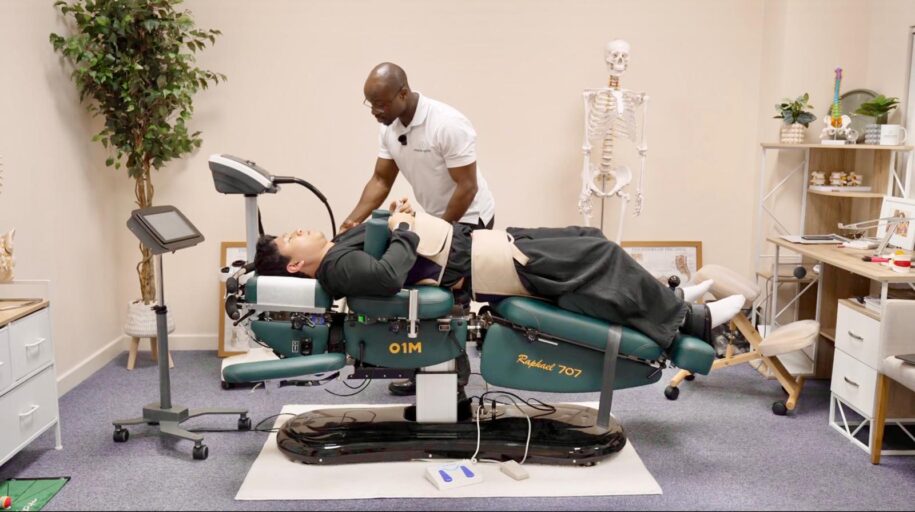
The treatment involves lying on a specialised table while the system applies carefully calibrated pulling forces to the affected area of your spine. Sessions typically last 15 to 25 minutes, and most patients find the process comfortable, even relaxing.
How does it work?
The theory behind spinal decompression is straightforward:
1. Reducing intradiscal pressure When traction is applied to a spinal segment, it creates a negative pressure (or vacuum effect) within the disc. This may help draw bulging disc material away from the nerve and encourage nutrient-rich fluid back into the disc.
2. Opening the neural foramen The foramina are the bony openings where nerves exit the spine. Decompression gently separates the vertebrae, increasing the space available for the nerve and reducing compression.
3. Improving spinal mobility Targeted traction can help restore movement to stiff or restricted spinal segments, reducing mechanical stress on surrounding structures.
4. Promoting healing By improving fluid exchange within the disc (which has limited blood supply), decompression may support the body’s natural repair processes.
What conditions may benefit from spinal decompression?
Spinal decompression is typically considered for:
- Disc bulges and herniations: where disc material is compressing or irritating a nerve.
- Sciatica: pain travelling into the leg due to nerve root compression.
- Degenerative disc disease: age-related loss of disc height and hydration.
- Facet joint syndrome: where degeneration of the small joints at the back of the spine contributes to stiffness and pain.
- Chronic lower back pain: that has not responded adequately to other conservative treatments alone.
Who is NOT suitable for spinal decompression?
Not everyone is a candidate. Decompression is generally not recommended for patients with:
- Spinal fractures
- Severe osteoporosis
- Spinal tumours
- Spinal infections
- Certain types of spinal instability (e.g., Grade 3 or 4 spondylolisthesis)
- Abdominal aortic aneurysm
- Pregnancy
- Patients with surgical spinal hardware (rods, screws, cages)
This is precisely why every patient at Reliable Spine undergoes a thorough assessment before any treatment is recommended. We need to confirm that decompression is safe and appropriate for your specific situation.
What does a typical course of treatment look like?
Spinal decompression is rarely used in isolation. At Reliable Spine, it forms part of a broader treatment plan that may include:
- Chiropractic adjustments
- Soft tissue therapy
- Rehabilitation exercises
- Ergonomic and lifestyle advice
A typical course involves 10 to 20 sessions, depending on the severity of your condition and how you respond. Some patients notice improvement within the first few sessions, while others require more time.
Progress is monitored throughout, and your treatment plan is adjusted based on your response.
What does a session feel like?
Most patients describe spinal decompression as a gentle stretching sensation. You remain fully clothed and lie face-up (or face-down, depending on the area being treated) on the decompression table.
The system applies traction in a cyclical pattern: pulling gently, holding, then releasing. This cycle repeats throughout the session. Most people find it comfortable, and some even fall asleep during treatment.
There’s no cracking, no sudden movements, and no pain. If at any point you feel uncomfortable, the treatment can be stopped immediately.
Does the research support spinal decompression?
The evidence for spinal decompression is growing, though it’s fair to say the research is still evolving. Several studies have shown promising results for patients with disc herniations and chronic lower back pain, particularly when decompression is combined with other conservative treatments.
Like many manual therapies, individual responses vary. What works well for one patient may not be the best approach for another. This is why clinical assessment, not marketing claims, should guide treatment decisions.
Frequently Asked Questions
Is spinal decompression painful? No. Most patients find it comfortable and relaxing. You may feel a gentle pulling sensation, but it should never be painful. The settings are always adjusted to your tolerance.
How many sessions will I need? This varies. A typical programme involves 10 to 20 sessions over several weeks. Your chiropractor will recommend a plan based on your assessment findings and monitor your progress throughout.
Can I have spinal decompression if I’ve had back surgery? Generally, patients with surgical hardware (screws, rods, cages, or artificial discs) are not suitable candidates. If you’ve had a previous discectomy without hardware, decompression may still be appropriate. This is assessed on a case-by-case basis.
Is spinal decompression the same as inversion therapy? No. Inversion therapy (hanging upside down) applies a general, uncontrolled stretch to the entire spine. Clinical spinal decompression uses computer-controlled forces targeted to specific segments. The precision and control are what differentiate the two approaches.
Will my symptoms come back after treatment? Decompression addresses the mechanical component of your condition, but long-term outcomes depend on rehabilitation, lifestyle changes, and ongoing spinal maintenance. We work with you to develop strategies that reduce the risk of recurrence.
Wondering whether spinal decompression could help you? Book a consultation at Reliable Spine. We’ll assess your condition, explain our findings, and discuss whether decompression is appropriate for your case.