
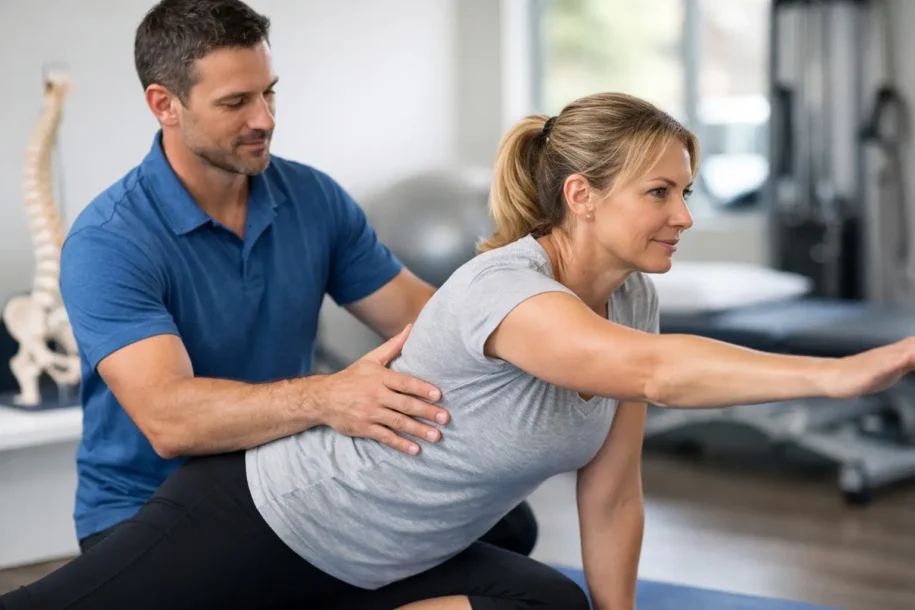
Back pain rarely stays in one place. A sore lower back can change how you walk, make sitting at work difficult and gradually affect your hips, shoulders or knees. Effective spinal rehabilitation Glasgow patients seek should look beyond the painful area, identify what is driving the problem and create a practical route back to comfortable movement.
At Reliable Spine, rehabilitation is not treated as an afterthought once pain has settled. It is a structured part of care, designed to improve spinal function, build confidence in movement and help reduce the cycle of recurring symptoms.
What spinal rehabilitation is designed to address
Spinal rehabilitation is a personalised programme of assessment, hands-on care where appropriate, movement guidance and progressive exercise. Its purpose is not simply to make an uncomfortable symptom quieter for a few days. The aim is to understand how the spine and surrounding joints are functioning, then address the factors contributing to pain, stiffness or restricted movement.
This may be appropriate for people experiencing persistent lower back or neck pain, sciatica, disc-related symptoms, postural strain, headaches linked to neck dysfunction, or spinal conditions such as scoliosis. It can also be valuable when shoulder, hip or knee pain appears to be connected to altered movement patterns and compensation elsewhere in the body.
Two people can both describe “back pain” but need very different care. One may have developed symptoms after lifting awkwardly; another may be struggling after years of prolonged sitting and reduced activity. A runner with leg pain may need a different approach from someone whose discomfort is associated with a disc injury. That is why a detailed assessment matters before choosing exercises or treatment.
Why symptoms can keep returning
Pain is often a signal that the body is not tolerating a particular load, position or movement well. Rest may help during a flare-up, but it does not always change the reason symptoms developed. Equally, repeatedly pushing through pain can lead to more guarding, stiffness and compensatory movement.
The spine works as part of a connected system. If a painful area becomes stiff or sensitive, you may unconsciously move around it. Your hip may rotate differently when walking, your upper back may become more rounded at a desk, or your neck and shoulders may work harder than they should. Over time, this can place extra stress on other joints and tissues.
A rehabilitation plan considers these patterns. It may examine spinal mobility, posture, muscle control, balance, everyday habits and the way symptoms respond to sitting, standing, bending, walking or training. The goal is to find a level of movement that is challenging enough to create progress but appropriate for your current condition.
A thorough assessment comes first
The first stage of spinal rehabilitation is understanding your history as well as your current symptoms. This includes when the problem started, what makes it worse or better, whether pain travels into an arm or leg, and how it affects work, sleep, exercise and daily tasks.
A physical assessment can then look at posture, spinal movement, joint function, neurological signs where relevant and areas of tension or weakness. For people with suspected disc injury, sciatica or more complex spinal concerns, this process helps determine whether conservative care is suitable and what form it should take.
This is also the point at which good clinical judgement is essential. Not every type of back pain should be managed in the same way, and some symptoms require prompt medical assessment. New or worsening weakness, numbness around the groin or saddle area, changes to bladder or bowel control, fever, unexplained weight loss, or pain following significant trauma should be assessed urgently by the appropriate medical service.
What a personalised rehabilitation plan may include
The right plan depends on your diagnosis, symptoms, health history and goals. Someone hoping to sit through a working day comfortably will have different priorities from an active adult aiming to return to the gym, golf or running.
Care may include chiropractic treatment to address restricted spinal or joint movement, alongside rehabilitation exercises that improve control, mobility and tolerance to load. Early-stage exercises are often deliberately simple. They may focus on moving with less guarding, improving breathing and trunk control, or restoring comfortable range of movement before progressing to more demanding activities.
As symptoms and function improve, rehabilitation should become more specific. That may mean practising hip hinging for lifting, building tolerance for walking, improving neck and upper-back control for desk work, or strengthening the hips and trunk to support returning to sport. Progress is not always linear. A temporary increase in symptoms can happen when activity changes, but it should be assessed in context rather than ignored.
For appropriate disc-related cases, spinal decompression may form part of a wider non-surgical management plan. This technology is intended to apply controlled traction to the spine and may be considered where clinical assessment indicates it could be beneficial. It is not a substitute for rehabilitation. Lasting progress still relies on improving movement, managing load and gradually returning to the activities that matter to you.
Spinal rehabilitation Glasgow patients can fit into real life
The best programme is one you can follow consistently. A complex routine that does not suit your work, caring responsibilities or current ability is unlikely to deliver useful results. Rehabilitation should be realistic, with clear instructions on what to do, how often to do it and how to recognise when an exercise needs adjusting.
For office-based professionals, changes may include breaking up prolonged sitting, improving workstation habits and building movement into the working day. For active people, the focus may be on modifying training temporarily rather than stopping everything. Reducing load, changing range of motion or selecting alternative exercises can allow you to remain active while your spine recovers.
This does not mean posture has to be perfect. Holding one rigid “correct” position all day is neither practical nor necessary. More often, the issue is staying in any one position for too long, particularly if your spine is already sensitive. Variety, regular movement and better tolerance to everyday demands are more useful targets.
Measuring progress beyond pain levels
Pain matters, but it is only one measure of recovery. During spinal rehabilitation, progress may first show up as being able to get out of bed more easily, walk further, sit through a meeting, turn your head while driving or carry shopping without fear of a flare-up.
Tracking these functional changes gives a clearer picture of whether care is working. It also helps guide the next stage of rehabilitation. If pain has reduced but bending remains difficult, for example, the plan may need more focus on mobility and movement confidence. If movement is improving but symptoms return after a busy week, the issue may be capacity, pacing or recovery rather than a need to stop activity entirely.
The most useful care plan is reviewed and adapted as you respond. Your body, work demands and goals can change, and rehabilitation should change with them.
When to seek support for ongoing spinal pain
If back or neck pain is persistent, repeatedly returns, travels into an arm or leg, or is limiting your normal routine, a professional assessment can provide useful clarity. The earlier you understand the contributing factors, the easier it can be to make purposeful changes rather than relying on short periods of rest or temporary symptom relief.
A considered spinal rehabilitation plan offers more than a set of generic exercises. It gives you a clearer understanding of your condition, a structured way to improve function and support as you work towards moving with greater comfort and confidence. Booking an assessment is a practical first step towards getting back to the work, exercise and everyday activities pain has been getting in the way of.
Leave a Reply