
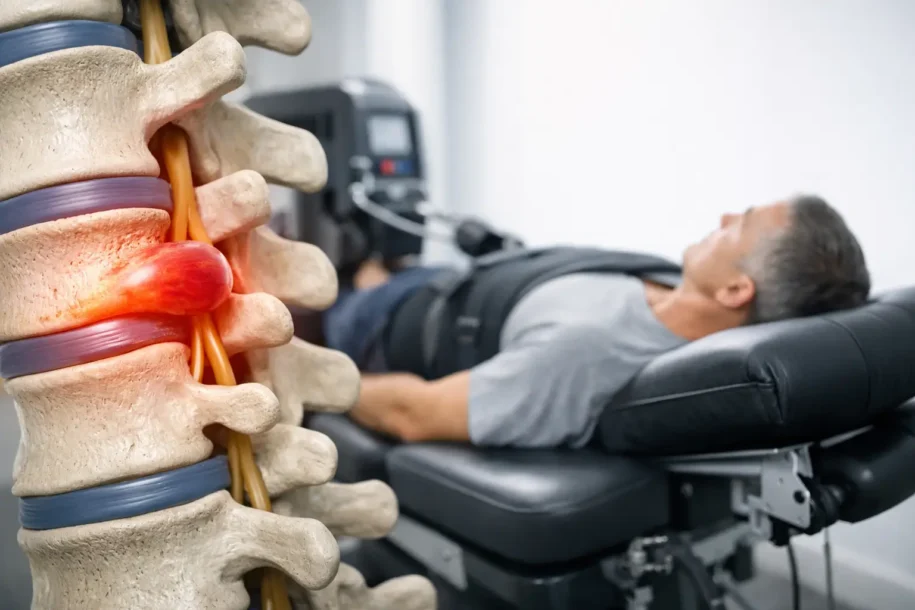
A disc bulge can make ordinary movements feel uncertain. Sitting through a working day, getting out of the car, lifting shopping or returning to the gym may trigger back pain, stiffness or pain travelling into the buttock or leg. People often ask, “can spinal decompression help disc bulge symptoms?” For the right person, it may form a useful part of a non-surgical care plan. It is not a one-size-fits-all fix, however, and the quality of the assessment matters as much as the treatment itself.
What a disc bulge means
Between the bones of the spine are discs that help absorb load and allow movement. Each disc has a tougher outer layer and a softer inner material. A disc bulge occurs when the disc extends beyond its usual boundary, sometimes placing irritation or pressure on nearby tissues and nerve roots.
Not every disc bulge causes pain. Some are found on scans in people with no symptoms at all. Equally, a relatively small disc change can be very uncomfortable if it affects a sensitive nerve or if the surrounding joints, muscles and movement patterns are not coping well.
Symptoms can vary. You may feel local lower-back pain and reduced movement, or develop sciatica-type symptoms such as pain, tingling, numbness or weakness running into the leg. The location of the disc problem, the degree of nerve irritation, your daily demands and how long symptoms have been present all influence the right approach.
Can spinal decompression help disc bulge symptoms?
Spinal decompression is a controlled, computer-guided form of traction designed to gently reduce pressure through selected spinal segments. During treatment, the body is supported on a specialised table while carefully measured pulling and relaxing forces are applied. The aim is to create a more favourable mechanical environment around the affected disc and nerve structures.
For some people with disc-related lower-back pain or leg pain, decompression may help reduce symptoms, improve tolerance for sitting and walking, and make rehabilitation exercises easier to progress. By reducing compressive loading temporarily, it can give an irritated area an opportunity to settle while treatment addresses the factors that may be keeping the problem active.
It should not be presented as a way to simply “push a disc back in”. Disc injuries are more complex than that. Recovery usually depends on a combination of appropriate loading, movement, spinal function, muscular control, sleep, work habits and time. Decompression is most valuable when it is used as one part of a personalised programme rather than a stand-alone treatment.
Why individual assessment comes first
Back and leg pain can resemble a disc problem without being caused primarily by a disc. Facet joint irritation, hip dysfunction, muscular referral, spinal stenosis and other conditions can create overlapping symptoms. A scan can be useful in some cases, but it does not replace a clinical examination.
A thorough assessment considers your symptom pattern, neurological signs, posture, spinal movement, strength, daily activities and relevant health history. This helps determine whether disc decompression is appropriate, which area requires attention and what else needs to be included in your rehabilitation.
At Reliable Spine, this process is centred on identifying the underlying drivers of pain and restricted movement, rather than offering symptom-only care. That may include structural spinal assessment, hands-on chiropractic care, decompression where indicated and practical rehabilitation tailored to your capacity.
What treatment for a disc bulge may involve
A care plan should reflect the stage and behaviour of your symptoms. Someone with severe acute leg pain may initially need a different approach from someone who has had recurring back stiffness for years and is now struggling to train or sit at work.
Spinal decompression appointments are generally comfortable and non-invasive. You remain clothed and are positioned securely on the table. The treatment is adjusted to your condition and response, with forces applied gradually. Some people notice relief early in their care; others improve more steadily as irritation reduces and they regain confidence in movement.
Decompression is commonly combined with other elements of care. Gentle spinal or joint treatment may be used where suitable to improve movement. Specific exercises can restore control through the trunk, hips and legs without overloading an irritable area. Advice on sitting, lifting, sleeping and pacing activity can also prevent the familiar cycle of feeling better, doing too much, then flaring symptoms again.
The goal is not to avoid all movement. Complete rest often leaves the spine and supporting muscles less prepared for normal life. The better approach is to find movements and levels of activity you can tolerate, then build from there in a structured way.
Who may be a good candidate for spinal decompression?
People with persistent or recurrent disc-related lower-back pain, sciatica, leg symptoms or reduced ability to sit, walk and bend may be considered for decompression after examination. It can be particularly relevant when symptoms have not settled with basic self-management alone and there is a clear mechanical component to the problem.
It may also suit active adults who want a non-surgical option while they work on restoring strength and movement. If pain has caused you to compensate through your hips, upper back or shoulders, treatment may need to look beyond the painful spot. A disc bulge rarely exists in isolation from how the rest of the body moves and manages load.
That said, decompression is not suitable for everyone. Suitability depends on factors including bone health, previous spinal surgery, spinal instability, certain inflammatory or medical conditions, pregnancy and the nature of the injury. A clinician should review these factors before recommending treatment.
When to seek urgent medical assessment
Most episodes of back pain and sciatica do not require emergency care, but some symptoms should never be managed by waiting for a routine appointment. Seek urgent medical attention if you develop new loss of bladder or bowel control, numbness around the genitals or inner thighs, rapidly worsening leg weakness, major trauma, fever with severe back pain, or unexplained weight loss alongside persistent symptoms.
Progressive weakness, such as a foot that repeatedly catches when walking or a noticeable loss of strength, also needs prompt assessment. These signs may indicate significant nerve involvement and require a different pathway from routine conservative care.
Making decompression part of a lasting recovery
A reduction in pain is welcome, but it is only one marker of progress. A stronger outcome is being able to sit through work without repeated flare-ups, walk comfortably, sleep better, pick up your child, return to training or take a longer journey without planning the day around your back.
That is why rehabilitation matters. As symptoms settle, the focus should gradually shift towards restoring spinal movement, hip function, trunk control and confidence under load. Your exercises should be specific enough to be useful, but realistic enough to fit around work and family life. Consistency usually matters more than doing an intense programme for a week and stopping.
It is also worth reviewing the demands that may have contributed to the issue. Long periods of sitting, repetitive bending, sudden increases in gym training, poor recovery and avoiding movement because of fear can all affect how a disc-related problem behaves. There is rarely one single cause, but there are often several practical changes that make recovery more dependable.
A considered non-surgical option
Spinal decompression can help some people with a disc bulge by reducing pain, easing nerve irritation and creating a better starting point for rehabilitation. Its value depends on an accurate diagnosis, careful case selection and a plan that addresses how your spine functions in daily life.
If back or leg pain is limiting the things you need or want to do, a detailed assessment can clarify whether decompression is appropriate and what your next steps should be. The most useful plan is the one that helps you move with greater confidence again, not simply one that chases short-term relief.
Leave a Reply