
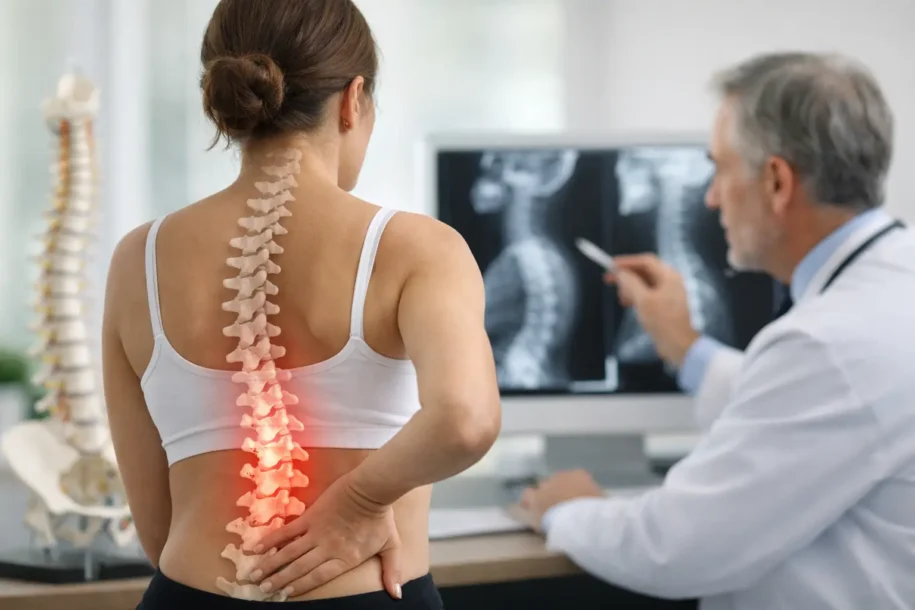
A spinal curvature is not always a problem. Everyone’s spine has natural curves that help distribute load, absorb force and allow us to stand, walk and move efficiently. The concern arises when a curve becomes more pronounced, develops unevenly, changes over time or begins to affect comfort, balance, breathing, movement or confidence.
For some people, the first sign is visible: one shoulder sits higher, the waist looks uneven or clothing hangs differently. For others, it is less obvious. Persistent back pain, stiffness after sitting, recurring neck tension, headaches, fatigue or a sense that one hip is always working harder may be the reason they seek help. A detailed assessment can clarify whether spinal shape is contributing to those symptoms and what practical steps may support better function.
What does spinal curvature mean?
Viewed from the side, a healthy spine has three gentle curves. The neck has an inward curve, the mid-back curves outwards and the lower back curves inwards. These are called cervical lordosis, thoracic kyphosis and lumbar lordosis. They are normal structural features, not faults to be eliminated.
When people refer to spinal curvature, they may mean a curve that is greater than expected, reduced, or one that moves sideways. The most recognised sideways curve is scoliosis, where the spine curves and rotates to some degree. Increased rounding through the upper back is often described as kyphosis, while an exaggerated inward lower-back curve may be called hyperlordosis.
The shape of the spine alone does not tell the whole story. Two people can have similar-looking curves but very different experiences. One may have no pain and remain highly active; another may have reduced movement, muscle fatigue or symptoms linked to how their body is compensating. That is why structural findings need to be considered alongside movement, daily demands, previous injuries and the symptoms that matter to the individual.
Signs that a spinal curve may need attention
A curve is worth assessing if you notice a visible change in posture, a rib prominence when bending forwards, uneven shoulders or hips, or a repeated tendency to lean to one side. It is also sensible to seek advice when back or neck pain keeps returning, exercise has become difficult, or sitting and standing feel increasingly uncomfortable.
In adults, spinal changes can be connected to long-standing scoliosis, age-related wear, previous injury, disc problems, reduced mobility or years of uneven movement patterns. Pain is not always caused by the curve itself. A stiff mid-back, poor hip control, weak endurance or an irritated disc can all alter the way the body moves and loads the spine.
Children and teenagers with suspected scoliosis should be assessed promptly by an appropriate healthcare professional, particularly if a curve appears to be progressing during growth. Adults who already know they have scoliosis may also benefit from review if symptoms change, their function declines or they feel increasingly unbalanced.
When urgent medical advice is needed
Most spinal curvature concerns are not emergencies, but certain symptoms need prompt medical assessment rather than waiting for a routine appointment. These include:
- new bowel or bladder changes, or numbness around the groin or inner thighs
- significant or worsening weakness in a leg, foot drop, or difficulty walking
- severe pain following a serious fall, collision or other trauma
- unexplained weight loss, fever, night pain or a history of cancer alongside new spinal pain
These signs can indicate conditions that require urgent investigation. If in doubt, contact NHS 111, your GP or emergency services as appropriate.
Why posture is only part of the picture
It is tempting to blame a spinal curve on posture alone, especially for people who spend long hours at a desk. Prolonged sitting can certainly contribute to stiffness, reduced movement variety and muscular fatigue. It may make an existing problem more noticeable. However, simply trying to hold yourself rigidly upright all day is rarely the answer.
Posture changes naturally throughout the day. The more useful question is whether your spine can move, tolerate load and recover after work, training, driving or household tasks. A person with a visible curve may be comfortable and capable, while someone whose posture appears straight may have substantial pain and restriction.
An effective approach therefore looks beyond appearance. It considers how the spine, pelvis, hips and shoulders work together. For example, limited hip movement may increase strain through the lower back; persistent neck stiffness may be influenced by restricted upper-back movement; and a painful knee may alter walking mechanics enough to aggravate the hip or spine.
A thorough assessment identifies what is driving symptoms
Before recommending care, a clinician should take time to understand the history of the problem. When did the symptoms begin? Is pain worse after sitting, lifting, walking or sleeping? Has there been a disc injury, sciatica, sporting injury or previous diagnosis of scoliosis? What activities have you stopped doing because of discomfort?
A structural spine assessment may include posture and movement analysis, spinal mobility, muscle and joint testing, neurological checks where indicated, and examination of connected areas such as the shoulders, pelvis, hips and knees. The purpose is not to chase a perfectly symmetrical body. It is to identify restrictions, compensations and loading patterns that may be keeping symptoms active.
Imaging is not necessary for every case. It may be appropriate when there are clinical reasons to investigate further, when a curve needs measuring, or when symptoms suggest that another medical opinion is required. Good care includes recognising when chiropractic management is appropriate and when referral is the safer next step.
Managing spinal curvature and related pain
Care depends on the type of curve, the person’s age, whether it is changing, and the symptoms present. A stable, painless curve may only need monitoring and sensible activity. A curve associated with pain, stiffness or loss of confidence in movement may benefit from a tailored plan that addresses both spinal function and the wider movement system.
For appropriate patients, chiropractic care may include hands-on treatment to improve joint movement and reduce muscular tension, alongside specific rehabilitation to build control, strength and tolerance. Exercises are selected for the person, not copied from a generic posture programme. Someone struggling with lower-back pain after desk work may need a different plan from an active person whose scoliosis becomes uncomfortable during running or gym training.
Where disc irritation or sciatica is part of the picture, some patients may be suitable for spinal decompression as part of a broader non-surgical management plan. This is not a one-size-fits-all treatment, and it should follow proper assessment. The goal is to reduce aggravating load where possible, restore movement gradually and help the patient return to normal activities with greater confidence.
Consistency matters more than perfection. Short, regular rehabilitation sessions, changes to work set-up, varied movement breaks and a sensible return to exercise can make a meaningful difference over time. Progress is often measured by practical improvements: walking further, sitting through a meeting, sleeping more comfortably, returning to training or picking up children without fear of triggering pain.
What you can do while waiting for assessment
Avoid complete rest unless you have been medically advised otherwise. Gentle walking and comfortable movement usually help prevent stiffness from building further. Break up long periods of sitting or standing, and avoid repeatedly forcing yourself into a painful position in the name of “good posture”.
Keep a note of what aggravates and eases your symptoms. Patterns such as pain when bending, relief when walking, numbness after driving or fatigue after a particular activity can give useful information during an assessment. If you have a known curve, bring any previous reports or X-rays with you if available.
At Reliable Spine, care begins by listening to what your body is telling you and assessing how your spine moves in the context of your everyday life. Whether your concern is scoliosis, a visible change in posture, recurring back pain or a growing restriction in what you can do, the most helpful next step is a clear assessment and a plan built around getting you moving comfortably again.
Leave a Reply