
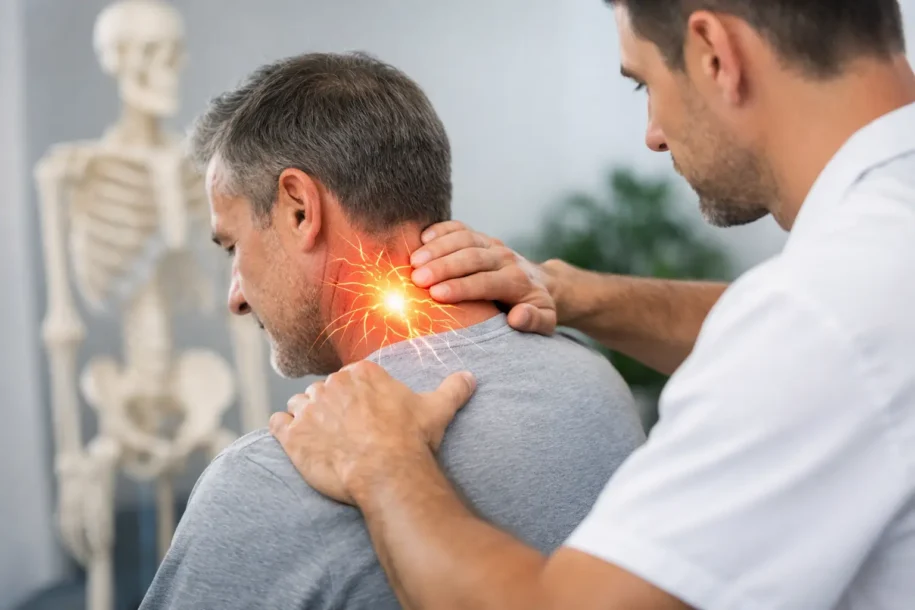
A sharp pain running from the lower back into the leg, tingling in the hand, or a patch of numbness around the shoulder can make everyday movement feel uncertain. Can chiropractors treat trapped nerves? In many cases, chiropractic care can help manage the spinal and movement problems contributing to nerve irritation, while improving comfort and function. The right approach depends on what is affecting the nerve, how long symptoms have been present and whether there are signs that need urgent medical assessment.
What people mean by a trapped nerve
“Trapped nerve” is a useful everyday term, but it does not describe one single condition. It usually refers to a nerve being compressed, irritated or sensitised as it travels from the spine into the arm or leg. The source may be a disc injury, joint irritation, narrowing around a nerve pathway, muscle tension, swelling or altered movement patterns.
Sciatica is a common example. The sciatic nerve itself is large, but symptoms often begin when a nerve root in the lower back becomes irritated. This can create pain, pins and needles, numbness or weakness travelling through the buttock and down the leg. In the neck, nerve irritation can cause pain into the shoulder, arm or hand, sometimes alongside reduced grip strength or altered sensation.
The location of the pain does not always identify the cause. Hip pain may be linked to lower-back mechanics; a sore shoulder may be influenced by the neck and upper back. That is why an assessment should look beyond the most painful area.
Can chiropractors treat trapped nerves caused by the spine?
Chiropractors can support the non-surgical management of many nerve-related symptoms when they arise from spinal dysfunction, disc-related irritation or restricted movement. Care is not about forcing a nerve back into place. It is about identifying the mechanical factors that may be placing stress on the nerve or making the nervous system more sensitive, then building a plan to address them.
For some people, treatment may involve gentle spinal mobilisation or adjustment to improve joint movement and reduce mechanical irritation. For others, the priority may be reducing pressure associated with a disc injury, improving posture, restoring movement through the hips and thoracic spine, or gradually rebuilding tolerance to walking, lifting and exercise.
A person with recent sciatica after bending awkwardly may need a different plan from someone whose symptoms have developed gradually after years of desk work. Equally, an active adult with leg pain during running may have a different set of contributing factors from someone who struggles to stand long enough to cook a meal. Effective care needs to reflect the individual rather than follow a standard sequence of appointments.
A thorough assessment comes first
Nerve symptoms deserve careful assessment before treatment begins. At Reliable Spine, this means discussing the onset and behaviour of your symptoms, your work and activity demands, relevant health history and previous injuries. A physical examination can then assess spinal movement, posture, muscle strength, reflexes, sensation and the way you move.
This process helps establish whether symptoms are likely to be related to the spine and whether chiropractic care is appropriate. It also helps identify which movements are aggravating the problem and which positions provide relief. This information guides a personalised treatment and rehabilitation plan.
Imaging is not necessary for every person with a suspected trapped nerve. However, it may be appropriate when symptoms are severe, persistent, worsening, linked to significant trauma or not responding as expected. If your presentation suggests that you need a GP, physiotherapy, imaging or specialist input, referral is the right next step. Good spinal care includes knowing when another form of assessment is required.
How chiropractic care may help
The aim is not simply to reduce pain for a day or two. Where appropriate, care should improve how the spine and surrounding joints move, reduce sensitivity around irritated structures and help you return to normal activities with more confidence.
Treatment may combine hands-on spinal care with tailored rehabilitation. This can include movement exercises to improve mobility, strengthening work to support the spine and advice on pacing activities while symptoms settle. Small adjustments to sitting, lifting, sleep position or training load can also make a meaningful difference when a nerve is irritated.
For suitable disc-related cases, spinal decompression may be considered. This technology uses controlled traction to gently change the forces through the spine. It is not appropriate for everyone, and it should never replace a full assessment, but it can form part of a broader non-surgical plan for certain patients with disc injuries or sciatica.
Progress is usually measured by more than pain levels. You may first notice that you can sit through a meeting with less discomfort, walk further, sleep more easily, put on your shoes without guarding, or return to the gym with better control. Nerve tissue can be slow to settle, particularly when symptoms have been present for months, so improvement is often gradual rather than immediate.
When chiropractic treatment may not be enough
Not every trapped nerve should be managed with chiropractic care alone. Some causes need medical treatment, medication, injections, surgery or a different specialist pathway. Severe or progressive neurological symptoms should always be taken seriously.
Seek urgent medical assessment if you have any of the following:
- new difficulty controlling your bladder or bowels
- numbness around the genitals, buttocks or inner thighs
- rapidly worsening weakness in a leg, foot, arm or hand
- severe pain following significant trauma, or pain with fever, unexplained weight loss or feeling generally unwell
These symptoms are uncommon, but they can indicate a condition requiring urgent investigation. Do not wait for a routine appointment if they occur.
There are also less urgent situations where a collaborative approach is sensible. If pain remains intense despite a period of appropriate conservative care, weakness is not improving, or the diagnosis is uncertain, further medical assessment can clarify the next step. The goal is to make sure you receive the right care at the right time, not to keep treating a problem that needs a different solution.
What you can do while symptoms settle
Complete rest is rarely the best answer for a trapped nerve. Staying in one position for long periods can increase stiffness and sensitivity, while trying to push through severe pain can flare symptoms. A better approach is usually measured movement.
Short, regular walks may be more tolerable than one long walk. Changing position regularly at a desk can be more helpful than chasing a perfect posture. If a movement repeatedly sends pain further down the arm or leg, reduce or modify it until you have been assessed. On the other hand, movement that keeps symptoms localised or gradually eases them may be useful as part of your recovery plan.
Avoid relying on internet exercises that are not matched to your condition. The same stretch that helps one person with sciatica may aggravate another person with a disc injury or hip-related problem. A specific assessment removes much of that guesswork.
Looking beyond the irritated nerve
A trapped nerve can be the loudest symptom, but it is often part of a wider pattern. Reduced spinal movement, prolonged sitting, deconditioning after an injury, poor lifting mechanics or compensation through the hips and shoulders can all influence recovery. Addressing these factors gives you a better chance of restoring lasting function rather than repeatedly managing flare-ups.
If nerve pain, numbness or tingling is limiting your work, sleep, exercise or confidence in movement, a detailed chiropractic assessment can help clarify what is going on and whether a non-surgical care plan is appropriate. The most useful next step is not to ignore the symptoms or assume the worst, but to have them assessed properly and move forward with a plan built around getting you back to the activities that matter to you.
Leave a Reply