
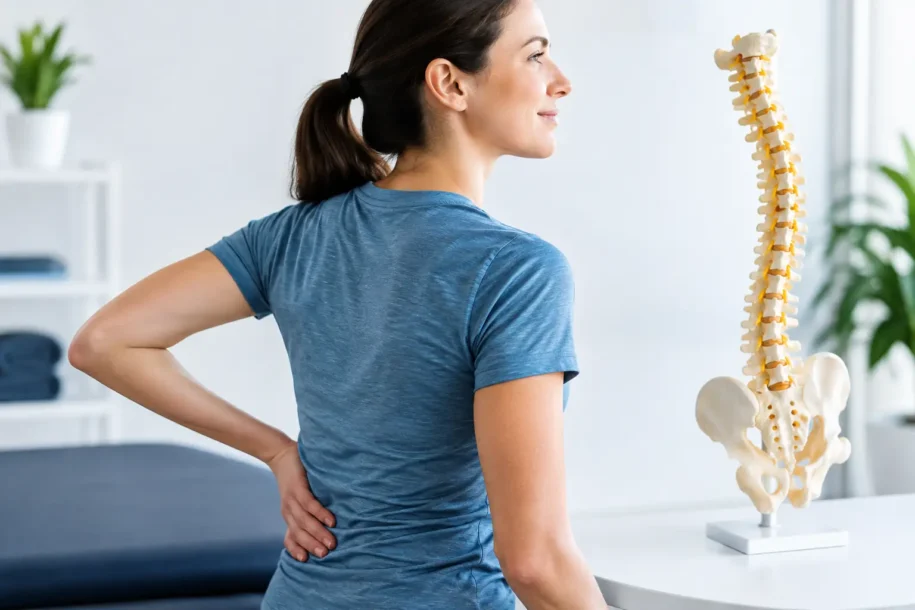
When disc pain makes getting out of a chair, driving across Glasgow or putting on your socks feel like a calculated risk, you want more than reassurance. You want to know what conservative disc care results may realistically look like, how long change can take and whether a non-surgical plan can help you return to normal movement.
For many people with a disc-related back problem or sciatica, conservative care is the appropriate first route. It does not mean ignoring the issue or simply waiting for pain to settle. It means assessing the source of symptoms carefully, reducing unnecessary irritation, restoring spinal movement and building the strength and confidence needed for everyday life.
What does conservative disc care involve?
The discs sit between the bones of the spine. They help absorb load and allow controlled movement. A disc can become painful following a sudden lift or twist, but symptoms may also build gradually after long periods of sitting, repeated bending, reduced movement or a history of previous back trouble.
Disc-related symptoms vary. Some people mainly feel central lower back pain and stiffness. Others experience pain travelling into the buttock, leg or foot, often described as sciatica. Tingling, altered sensation or weakness can occur when nearby nerve tissue is irritated. Neck discs can also refer pain into the shoulder, arm or hand.
Conservative disc care begins with a detailed assessment rather than assuming every episode of back pain has the same cause. At Reliable Spine, this may include reviewing your symptoms, movement tolerance, posture, spinal function and any compensatory patterns through the hips, shoulders or pelvis. The findings help shape an individual plan that may combine chiropractic care, targeted rehabilitation, advice on activity modification and, where suitable, spinal decompression.
The aim is not to promise a perfect scan or make pain disappear overnight. It is to reduce pain and sensitivity, improve how the spine and surrounding joints move, and help you tolerate the activities that matter to you.
Conservative disc care results are usually gradual
The first positive change is often not complete pain relief. You may notice that you can stand a little longer, turn in bed with less discomfort or walk without symptoms travelling as far down the leg. These practical markers can matter more than a single good or bad day.
In the early phase, symptoms can fluctuate. A busy day, an awkward lift, a poor night’s sleep or too much time sitting may temporarily increase pain. This does not automatically mean further damage has occurred. Disc and nerve-related symptoms can be sensitive to load, and recovery is rarely a straight line.
Over several weeks, appropriate care commonly focuses on increasing tolerance. That might mean gradually returning to walking, work tasks, gym training, gardening or caring for children without a significant flare-up afterwards. As function improves, the programme should progress too. Continuing with only passive treatment when you are ready to rebuild strength may limit longer-term results.
The pace depends on several factors: how long symptoms have been present, whether leg pain or neurological signs are involved, your general health, your work demands, sleep, stress and how consistently you can follow the rehabilitation plan. A recent episode may settle relatively quickly, while persistent or recurrent pain can require a more measured programme.
Pain reduction is only one measure of progress
Pain matters, but it is not the only outcome worth tracking. A thorough plan should also consider whether your range of movement is improving, whether numbness or leg symptoms are becoming less frequent, and whether you can resume the tasks pain has taken away from you.
For an office-based worker, success may be sitting through a meeting, commuting and completing the day without needing to lie down. For an active adult, it may be returning to a gradual running or strength-training programme. For someone whose pain has been present for years, a meaningful result may begin with sleeping better, walking further and feeling less fearful of bending.
Why assessment changes the outcome
Two people can both say they have a “slipped disc” while needing very different care. One may have a recent disc irritation with referred pain but no meaningful nerve loss. Another may have significant sciatica, marked movement restriction and weakness that needs closer monitoring. A third may have pain driven partly by the disc but maintained by hip stiffness, poor movement control or years of avoiding activity.
This is why a structural spine assessment is valuable. It helps identify the movements and positions that provoke symptoms, as well as the areas that are not contributing enough. Treatment can then be tailored rather than based on a generic set of exercises or repeated short-term pain relief.
Spinal decompression may be considered for selected disc and sciatica cases. This technology applies carefully controlled traction to the spine and may help some patients who are not tolerating load well. It is not a cure-all, and it should sit within a broader plan that includes clinical reassessment and rehabilitation. The right option depends on your presentation, response to care and medical history.
What you can do between appointments
The work done outside the clinic often affects conservative disc care results. Rest can be useful for a very short period when pain is acute, but prolonged inactivity can increase stiffness, reduce confidence and make normal movement feel harder. The better approach is usually relative rest: avoid the activities that clearly aggravate symptoms while keeping gently active within tolerable limits.
Your clinician may advise you to break up long periods of sitting, adjust your workstation, use short walks to keep moving and practise specific exercises at the right stage of recovery. The right exercise is not necessarily the hardest one. It is the one you can perform with good control, without a substantial or lasting increase in symptoms.
It also helps to think about the demands placed on your spine across the whole week. A single heavy lifting session after five sedentary days can be a difficult jump for an irritated back. Gradually increasing exposure to bending, lifting and training is usually more useful than avoiding those movements forever.
When conservative care needs urgent medical input
Most back and disc problems can be assessed and managed conservatively, but some symptoms require urgent medical attention. Seek urgent help if you develop new difficulty controlling your bladder or bowels, numbness around the genitals or buttocks, rapidly worsening leg weakness, severe unrelenting pain with significant illness, fever, unexplained weight loss, or symptoms after major trauma.
A careful clinician should also refer or co-manage when symptoms are not progressing as expected, neurological signs are worsening or further investigation is needed. Conservative care is not about delaying appropriate medical treatment. It is about choosing the most suitable pathway based on a full clinical picture.
Setting realistic expectations for lasting improvement
Lasting improvement usually comes from combining symptom relief with better capacity. If care reduces pain but you remain unable to sit, lift, walk or train with confidence, the rehabilitation phase is unfinished. Equally, pushing through a demanding exercise plan before symptoms have settled enough can slow progress.
The most useful plan evolves as you do. Early appointments may focus on calming pain and identifying aggravating movements. Later care can focus on restoring spinal mobility, improving strength and addressing the movement habits that contributed to repeated flare-ups. This gives you a more practical way to manage your back than constantly avoiding the activities you enjoy.
If disc pain or sciatica is limiting your work, sleep or independence, a detailed assessment can replace uncertainty with a clear starting point. The next helpful step is not to guess how serious it is, but to understand how your spine is functioning and build a plan that moves you safely towards the life you want to get back to.
Leave a Reply