
Walking to the shops should not require a search for the next bench. Yet for many people with lumbar spinal stenosis, standing upright or walking for even a short distance can bring aching, heaviness, tingling or weakness into the legs. This lumbar stenosis chiropractic guide explains what may be happening, how a careful assessment can help, and where chiropractic care may fit within a safe, non-surgical management plan.
Lumbar spinal stenosis is not simply ‘wear and tear’ or an inevitable part of getting older. It describes a narrowing of the spaces in the lower back through which nerves travel. That narrowing can irritate or compress nerve tissue, particularly when the spine is extended during standing or walking. Symptoms, scan findings and day-to-day function do not always match neatly, so treatment should be led by a thorough clinical assessment rather than an image alone.
What lumbar spinal stenosis can feel like
The most recognisable pattern is discomfort in the buttocks or legs that builds during standing and walking, then eases when sitting down or bending forwards. Some people find they can walk further while leaning over a shopping trolley or when cycling, because this position can create more space around the nerves.
Symptoms vary considerably. You may notice low back stiffness, pain travelling into one or both legs, pins and needles, numbness, cramping, heaviness or a feeling that the legs are less reliable. For others, the main issue is reduced walking tolerance rather than sharp pain. Stairs, hills and prolonged standing can become more difficult, while sitting may provide fairly quick relief.
These symptoms can overlap with sciatica, hip problems, vascular conditions and peripheral nerve issues. That is why an assumption based on one symptom alone can lead to the wrong plan. The aim is to understand the pattern, identify the structures likely involved and assess how your back, hips, pelvis and lower limbs are working together.
Lumbar stenosis chiropractic guide: where care may help
Chiropractic care is not a substitute for urgent medical treatment, and it cannot reverse every structural change associated with stenosis. It may, however, play a useful role for appropriate patients by improving spinal and joint movement, reducing mechanical irritation, addressing protective muscle tension and building capacity for daily activity.
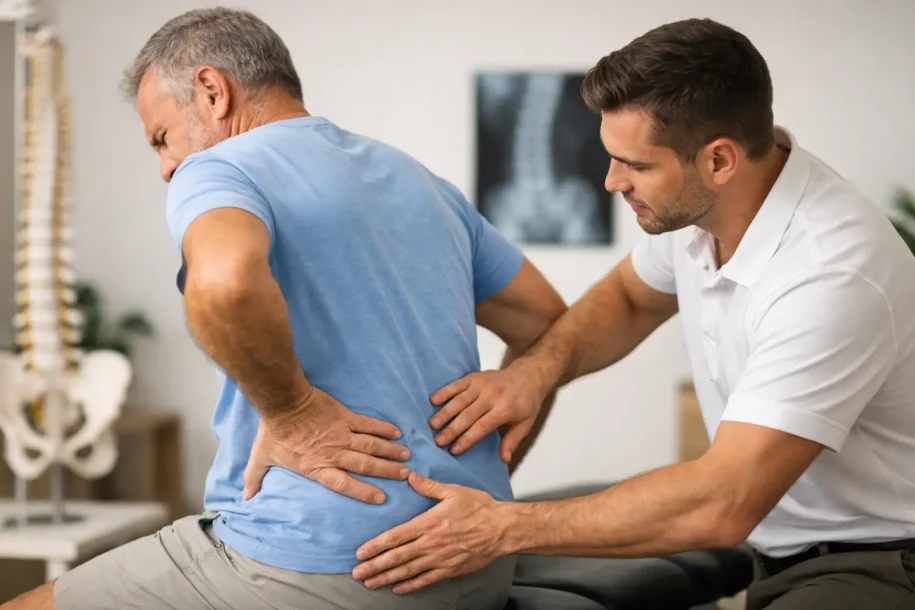
At Reliable Spine, care starts with a detailed assessment rather than a one-size-fits-all treatment. This includes discussing the onset and behaviour of your symptoms, your walking and standing tolerance, previous injuries, work demands, activity levels and relevant medical history. A physical examination may assess posture, spinal movement, neurological signs, hip function, strength and movement patterns.
The findings help determine whether conservative chiropractic management is appropriate, whether imaging or liaison with your GP is advisable, or whether you need a more urgent medical opinion. This matters because lumbar stenosis exists on a spectrum. Someone with manageable symptoms and restricted movement needs a different approach from someone whose leg weakness is progressing.
For suitable cases, a personalised plan may include carefully selected spinal mobilisation or adjustment techniques, soft-tissue work where indicated, mobility work and progressive rehabilitation. Treatment should be adapted to your tolerance on the day. More force is not necessarily better, especially when symptoms are irritable or there are signs of nerve sensitivity.
Structural care and movement quality
A lower back that is stiff and painful rarely works in isolation. Reduced hip movement, a forward-leaning posture, weak or poorly coordinated trunk muscles and altered walking mechanics can all influence how the lumbar spine is loaded. People often compensate without realising it, shifting weight through one hip or limiting stride length to avoid provoking symptoms.
Structural spine care looks beyond the point of pain. The goal is to improve how the spine and surrounding joints move and tolerate load, while helping you regain confidence in everyday tasks. This may mean being able to stand at the kitchen worktop, walk through a supermarket or return to a regular exercise routine with fewer flare-ups.
Rehabilitation is not an optional extra
Hands-on treatment can help create an opportunity for better movement, but lasting progress usually depends on what follows. Rehabilitation for lumbar stenosis should be specific, measured and built around your starting point.
Many people respond well to exercises that improve hip mobility, trunk control, leg strength and walking tolerance without repeatedly aggravating their symptoms. Flexion-tolerant positions may feel more comfortable for some people, but exercise selection is never identical for everyone. Your plan may also include pacing strategies, changes to how you lift or stand, and guidance on returning to activities gradually.
The right dose is crucial. Pushing through severe leg pain, numbness or weakness is not a badge of progress. Equally, avoiding all movement can reduce strength and make ordinary activity feel increasingly difficult. A good rehabilitation plan finds the middle ground: enough challenge to build function, with adjustments when symptoms signal that the load is too high.
Could spinal decompression be appropriate?
Spinal decompression is sometimes considered where disc-related symptoms, nerve irritation or certain mechanical presentations are contributing to pain and loss of function. It uses controlled traction to gently unload the spine. For some patients, this may be a useful addition to a wider care plan that includes manual care and rehabilitation.
It is not suitable for every presentation of lumbar stenosis, and it should not be offered as a guarantee or a stand-alone answer. Suitability depends on your symptoms, examination findings, medical history and any imaging already available. A responsible clinician will explain the potential benefits, limitations and alternatives before recommending it.
Practical ways to manage daily activity
Small changes can make a meaningful difference while you are receiving care. Break longer walks into shorter, planned intervals rather than waiting for symptoms to become severe. If standing brings on leg discomfort, use opportunities to sit briefly, change position or place one foot on a low step where practical.
Choose movement you can repeat consistently. A short walk, gentle cycling or prescribed exercises completed regularly is often more productive than an occasional session that leaves you significantly worse for days. Keep a simple note of what improves or aggravates your symptoms, including the time it takes for leg symptoms to appear. This gives useful information when refining your care plan.
Workstation and household set-up can also matter. Sitting for long periods may not be ideal for general health, but repeatedly forcing an upright standing posture that increases leg pain is not the answer either. Vary your position, organise regular movement breaks and use supportive positions advised for your individual presentation.
When lumbar stenosis needs urgent medical attention
Most lower back and leg symptoms can be assessed through a routine appointment, but certain changes require urgent medical review. Seek immediate medical advice if you develop new difficulty controlling your bladder or bowel, numbness around the genitals, inner thighs or buttocks, or rapidly worsening weakness in one or both legs.
Also arrange prompt assessment if pain is severe and unrelenting, follows significant trauma, is accompanied by fever or unexplained weight loss, or you have a history of cancer, serious infection or immune suppression. These signs do not automatically mean something serious is wrong, but they should not be managed through exercises or spinal treatment alone.
What progress should realistically look like
Improvement is usually measured in function as well as pain. You may first notice that symptoms settle more quickly after walking, that you can stand longer before your legs feel heavy, or that you recover more easily following a busy day. Pain levels can fluctuate, particularly during the early stages, so the overall trend across several weeks matters more than one difficult day.
Some people need a period of conservative care and rehabilitation to manage symptoms effectively. Others may require further investigation, medication support through their GP or referral to a spinal specialist. There is no benefit in delaying that conversation when symptoms are not improving as expected or neurological function is declining.
The most useful next step is a clear assessment of your symptoms, movement and goals. With the right diagnosis and an individual plan, many people can move with greater confidence and return to the everyday activities that pain has made feel out of reach.
Leave a Reply