
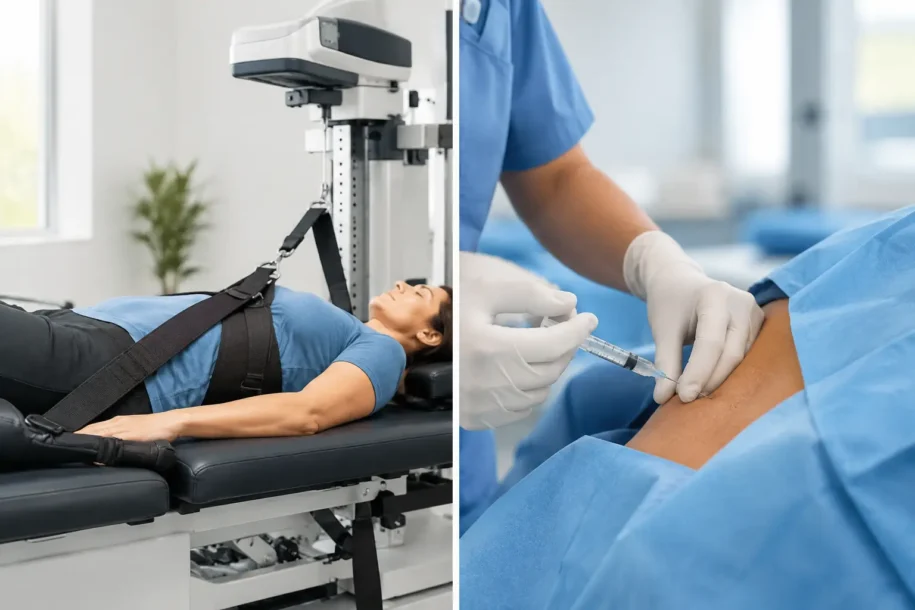
Pain shooting from the lower back into the buttock or leg can make sitting, sleeping, driving and even putting on shoes difficult. When symptoms persist, people often find themselves comparing spinal decompression versus epidural injections, particularly when sciatica or a disc injury is suspected. Both may have a role in managing certain spinal conditions, but they work in very different ways and suit different clinical situations.
The most useful question is not simply, “Which treatment is better?” It is: “What is driving my symptoms, and what approach gives me the best chance of restoring comfortable movement and daily function?” A thorough assessment is essential before choosing a treatment pathway.
What spinal decompression aims to do
Non-surgical spinal decompression is a controlled, computer-guided traction treatment. It gently changes pressure within the spine by applying and releasing a carefully calculated pulling force. For appropriate patients, this may help reduce mechanical stress around an irritated disc and nerve root.
Disc-related pain can occur when a spinal disc is injured or bulges beyond its usual boundary. If nearby nerve tissue becomes irritated, symptoms may include lower back pain, sciatica, tingling, numbness, weakness or a feeling that the leg will not move normally. The source of pain is not always the disc alone. Joint stiffness, poor spinal control, altered posture, muscular guarding and movement compensation can all affect how the spine loads during work, exercise and everyday tasks.
Spinal decompression is therefore not usually treated as a stand-alone answer. At Reliable Spine, where appropriate, it forms part of a personalised plan that may also include chiropractic care, movement rehabilitation and guidance on modifying aggravating activities. The aim is to improve spinal function and build the capacity to return to walking, work, training and normal household activities with greater confidence.
Who may be suitable for decompression?
Decompression may be considered when assessment suggests disc involvement or nerve irritation and symptoms have not settled with rest, activity modification or simpler care. It can be particularly relevant for people with persistent lower back pain and leg symptoms who want to explore a non-surgical, rehabilitation-focused option.
Suitability depends on your health history, examination findings and the nature of the problem. Certain conditions, including some fractures, severe osteoporosis, spinal instability, infection, cancer or particular post-surgical circumstances, may mean decompression is not appropriate. New or progressive leg weakness, loss of bladder or bowel control, or numbness around the saddle area requires urgent medical assessment rather than routine conservative care.
What epidural injections aim to do
An epidural injection is a medical procedure in which medication, often a corticosteroid with local anaesthetic, is placed into the epidural space around the spinal nerves. It is typically considered when inflammation around a nerve root is thought to be a significant contributor to pain, especially in acute or severe radicular pain such as sciatica.
The primary purpose is usually to reduce inflammation and pain enough to make daily life and rehabilitation more manageable. For some people, this can provide valuable short-term relief during a severe flare-up. It may also be used when symptoms are substantially limiting sleep, work or mobility, or when a clinician is considering how to avoid or delay surgery.
However, an injection does not physically repair a disc, restore spinal movement or correct the movement habits that may be contributing to recurrent loading. Relief can vary considerably. Some people gain meaningful improvement for weeks or months, while others notice little change or find that symptoms return. The response depends on the diagnosis, the level and severity of nerve irritation, and individual factors.
Like any medical procedure, epidural injections carry potential risks. These may include temporary increases in pain, headache, bleeding, infection, adverse reaction to medication and, rarely, more serious complications. A medical specialist should discuss the likely benefits and risks in the context of your individual case.
Spinal decompression versus epidural injections: the key difference
The main distinction is the treatment target. Spinal decompression is intended to address mechanical loading within the spine while supporting a wider programme of functional recovery. Epidural injections are intended primarily to reduce inflammation and pain around irritated nerve tissue.
That does not make one universally preferable to the other. If pain is so intense that a person cannot sleep, walk comfortably or engage in rehabilitation, an injection may be a reasonable medical option to discuss with their GP or specialist. If symptoms are persistent but manageable and assessment identifies a mechanical disc-related pattern, a structured non-surgical programme including decompression may be more aligned with the goal of improving movement and resilience.
In some cases, the approaches are not mutually exclusive. A patient may receive medical pain management while also working on the physical factors that affect recovery. The key is avoiding a symptom-only approach where possible. Reduced pain is valuable, but lasting progress also requires attention to how the spine and body move, tolerate load and recover.
The importance of diagnosis before treatment
Sciatica is a description of symptoms, not a diagnosis by itself. Pain travelling down the leg can arise from disc irritation, spinal stenosis, joint dysfunction, hip problems or less common causes. Likewise, lower back pain may be driven by several structures at once.
This is why treatment should not be selected from a symptom list alone. A detailed consultation should consider the onset of pain, aggravating and easing positions, neurological symptoms, previous injuries, work demands, exercise habits and relevant medical history. Physical examination can assess spinal movement, nerve function, strength, reflexes, posture and compensatory patterns through the hips and pelvis.
Imaging can sometimes be helpful, but it must be interpreted alongside the clinical picture. Disc bulges are common, including in people without pain. A scan result should not automatically dictate treatment without considering whether it matches your symptoms and examination findings.
Recovery is more than reducing pain
Whether you choose conservative care, an injection, or a medical referral, rehabilitation still matters. When pain has been present for weeks or months, people often stiffen their movement, avoid loading one side of the body or lose confidence in bending and lifting. These protective strategies can be understandable in the short term but may become part of the problem if they continue after the original flare-up settles.
A tailored rehabilitation plan can help restore mobility, trunk control, hip movement and tolerance for normal activities. For an office-based worker in Glasgow, that may mean being able to sit through a meeting, commute without repeated stops and get through a day without a growing leg ache. For an active adult, it may mean progressively returning to the gym, running, golf or lifting without provoking a flare-up.
When should you seek further medical advice?
Seek urgent medical help if back or leg pain is accompanied by changes in bladder or bowel control, numbness around the genitals or inner thighs, rapidly worsening weakness, fever, unexplained weight loss, severe unrelenting night pain, or pain following significant trauma. These symptoms need prompt medical investigation.
For ongoing back pain, sciatica or suspected disc injury that is restricting normal life, an assessment can clarify whether conservative spinal care is appropriate and whether onward medical referral is needed. You do not need to decide between treatments before you understand what is happening.
The right next step is a clear assessment that treats you as more than an MRI finding or a painful symptom. When the cause, contributing factors and goals are understood, it becomes much easier to choose care that supports reduced pain, stronger movement and a return to the activities that matter to you.
Leave a Reply